
Trinitario
Our cacao trees are older than the zionist occupation of Palestine (part 1 of 2)


Earlier this summer we reopened our fundraiser, from the cacao we grow, ferment, and roast ourselves, to support a friend and their family who were displaced in Gaza.
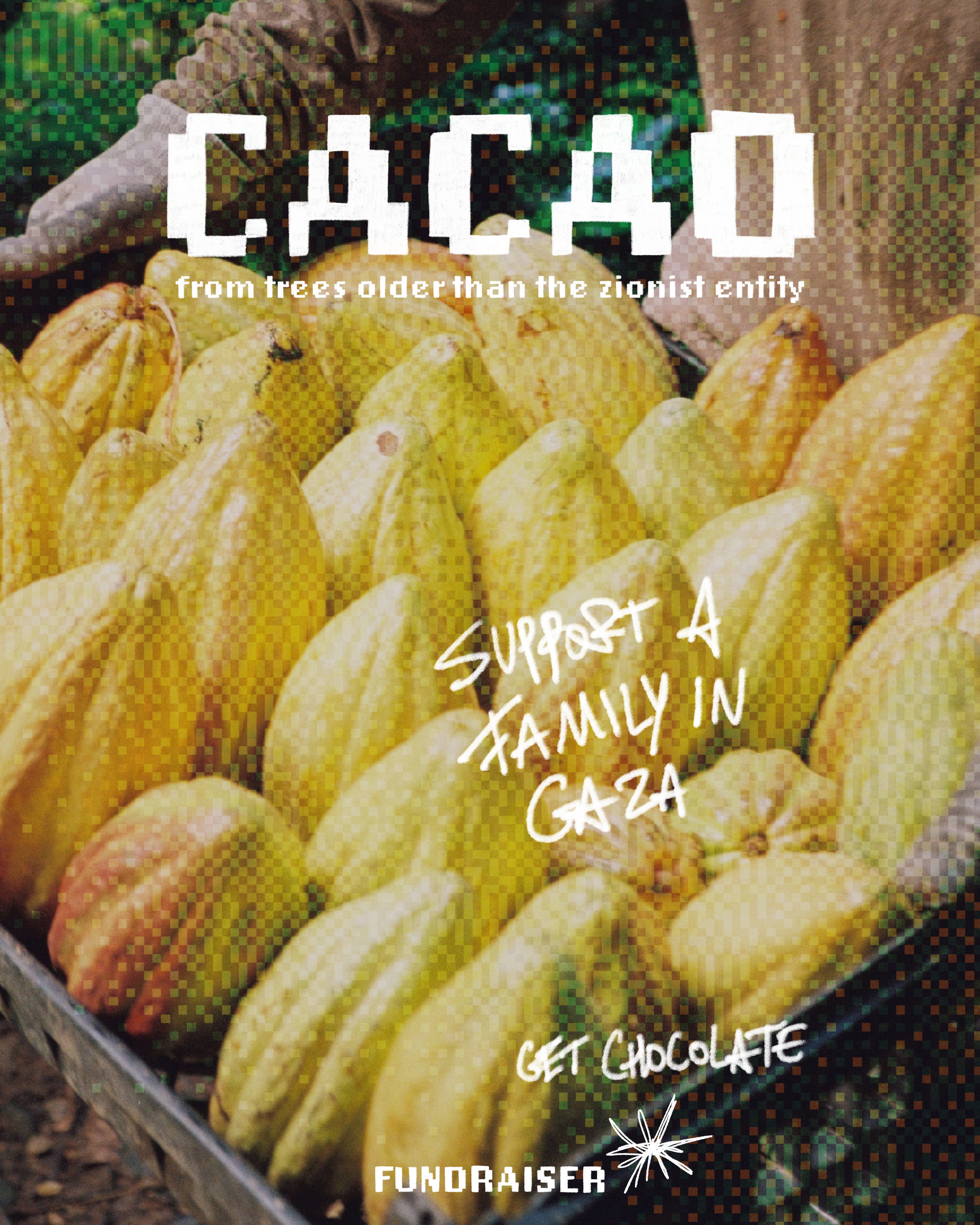
HOW TO GET CACAO ⬇️
1. SEND YOUR DONATION (+shipping, mailing address)
to the farm paypal: buenocompartir@gmail.com (friends/family)
2. YOU GET CACAO!
DONATION:
$10 donation - 1 oz of cacao
$15 donation - 2 oz of cacao
$25 donation - 4 oz of cacao
$50 donation - 8 oz of cacao
SHIPPING:
$4 untracked USPS, $14 tracked USPS
PLUNDER & PILLAGE
At Bueno Compartir, we’re are acutely aware of the history of cacao: plundered from indigenous conquerees and proliferated around the world, grown by the enslaved to satisfy the enriched, and white-washed as products of Germany, Switzerland, Britain, and more recently Dubai, latitudes and terrains where cacao trees cannot even grow.
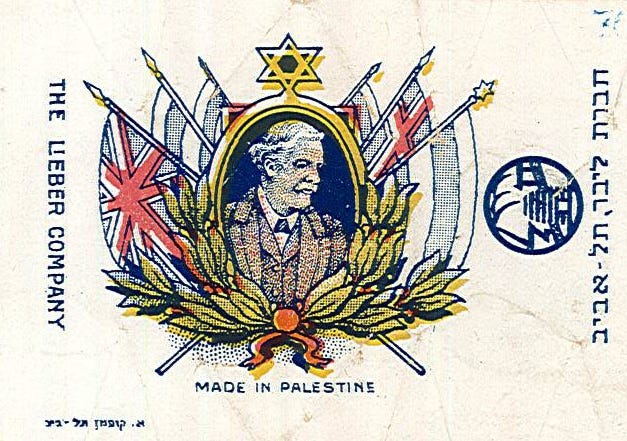
We know that Europeans were immediately obsessed with cacao, the appetite-suppressing caffeinated aphrodisiac, and so the history of cacao became intertwined with the history of European conquer. Certain that Palestine can be found everywhere, we traced how chocolate is implicated in zionist settler colonialism. And we found a lot.
The history is complex—the British-armed zionists expelled Palestinians using American-made guns purchased with Ghanian-grown cacao—so it will be broken down into two parts: plunder and pillage. This newsletter is an investigation into how our farm, and the world, got its cacao.
PART ONE: PLUNDER
Our cacao trees are older than the zionist occupation of Palestine and are still kicking. We’ve figured out their age from our neighbors’ stories. In their 70s and 80s, they reminisce about the chocolate balls their mother used to make them as kids: hand-pressed single-servings that could be dropped into a mug of warm milk at a moment’s notice. Both Hiram and Juan agree—and they don’t agree on much—that our trees were planted years before they were born.
Their mother was a Viruet, a uniquely Puerto Rican last name with an interestingly French character. If the family didn’t immigrate directly from France in search of work on Puerto Rico’s coffee plantations1, they could’ve descended from any of the French settler projects throughout the lesser Antilles that the Europeans named after their saints—Saint Martin, Saint Vincent, Saint Kitts, Saint Lucia, Saint Croix, and so on—as they collected Awarak homelands like baseball cards.
Importantly, the Lesser Antilles are the smaller and more arid islands to which indigenous and African resistant fighters were sent in exile. There, they were forced to grow the world’s cacao. The first known American play written, produced, and performed by an all-Black cast in 1823, The Drama of King Shotaway, details African and indigenous insurrection within the lesser Antilles.2
A major clue into our cacao’s origin comes from the fruits themselves. The deep-ridged rinds suggests that they are not forastero variety. Nearly all of the world’s chocolate (90%) is forastero variety because of how fast and abundantly it grows, adapting well to all kinds of newly conquered lands. Forastero was not grown for flavor, it was grown for colonization.
To differentiate further we check out the beans inside the fruit. With a reddish-orange pod in one hand and a fat machete in the other, we split the rind along its equator and scoop out the pulp-covered raw beans.
Forastero beans are deep purple, signaling a high concentration of polyphenols which are healthy yet bitter, requiring more sugar be added for the European palate. Conversely, white beans belong to the criollo variety, which became the more delicate, sweeter cacao reserved for Spanish royalty (also because white=purity=supremacy). What we find in our fruit is a violet spectrum from pastel pink to a royal purple, indicating a hybrid with a specific origin.
A BLAST
They called it a blast, but no one’s exactly sure what it means. It could be what white settlers first called hurricanes. Or it could refer to a massive crop failure from disease or fungus (ceratocystis wilt causing sudden death or a Phviophthora infection). But we know the result: the near extinction of criollo cacao in 1727.
Specifically, the blast hit the lesser Antilles, impacting most severely the island of Trinidad, where the Spanish had already planted cacao (via enslaved labor) for 200 years. It was responsible for practically all of the world’s trinitario production when its supply was completely wiped out.3
As the story goes, to save the industry from collapse, Europeans brought in saplings of robust forastero crop from fellow settlers in Venezuela, which then naturally hybridized with the scant few surviving criollo trees, changing the industry. The hybrid that was born on the outskirts of the newly planted forastero plantations was named trinitario (for its birthplace) and became highly coveted for its ability to produce luxurious cacao on sturdy trees. Flavor and resilience as the natural byproduct of disaster.